
May 6 2026 | Insights | Emma Bowler
5 Signs Your Factory Has Outgrown Spreadsheets
Spreadsheets were never designed to run modern manufacturing operations.
Yet across the industry, production teams still rely on them to track downtime, manage shift reporting, monitor KPIs, and explain performance problems after they’ve already happened.
What starts as a simple reporting tool gradually becomes something much bigger – a patchwork system holding critical operations together.
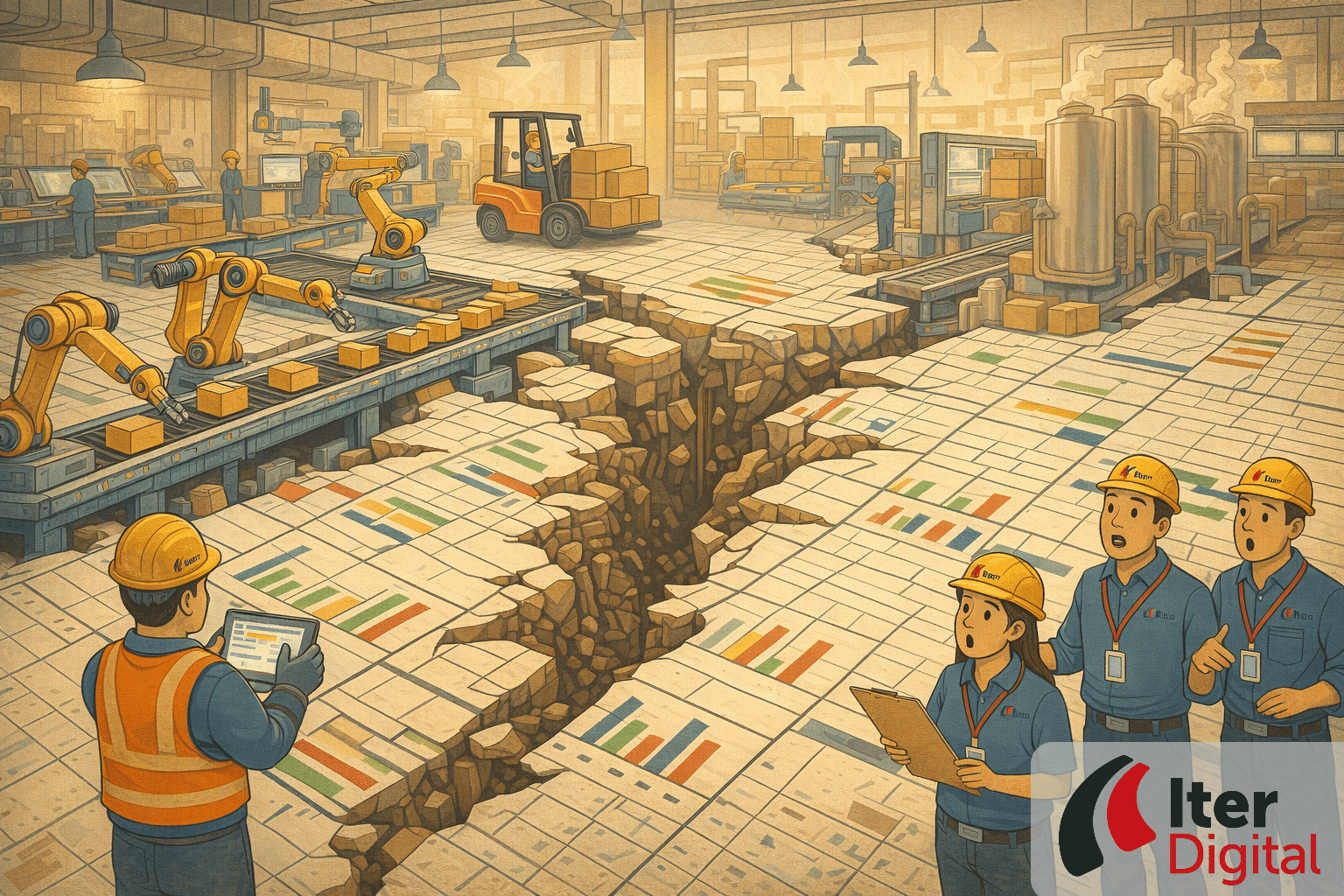
The problem is that spreadsheets create the illusion of visibility.
Data exists. Reports get produced. Meetings happen.
But behind the scenes, teams are wasting hours manually updating information, reacting too slowly to issues, and making decisions based on data that’s already out of date.
At some point, every growing manufacturer reaches the same conclusion:
The spreadsheet isn’t the problem.
The dependency on it is.
Here are five clear signs your factory may have already outgrown spreadsheets.
1. Your Supervisors Spend More Time Updating Reports Than Improving Production
If the last hour of every shift is spent filling in spreadsheets, chasing numbers, or correcting production data, operational efficiency is already taking a hit. This is one of the biggest hidden drains in manufacturing. Highly skilled people end up buried in administration instead of solving problems on the shop floor. And because the process is manual, the data is often:
- delayed
- inconsistent
- incomplete
- open to human error
Meanwhile, production issues continue in real time. Manufacturers don’t lose efficiency because people aren’t working hard. They lose efficiency because too much time is spent managing information instead of acting on it.
The more a business grows, the harder spreadsheets become to maintain.
2. Your Production Meetings Start With Arguing Over the Numbers
This is one of the clearest warning signs.
Production has one spreadsheet.
Quality has another.
Engineering tracks downtime differently.
Management receives a completely different version of the story.
Instead of discussing solutions, teams spend valuable time debating:
- Which numbers are correct
- Whether downtime was recorded properly
- Why KPIs don’t match
- Who updated what
When confidence in the data disappears, decision-making slows down. And in manufacturing, slow decisions are expensive.
A connected digital operation creates a single version of the truth – where everyone sees the same live production data, in real time.
No conflicting reports.
No duplicated spreadsheets.
No guesswork.
3. You Only Discover Problems After the Shift Has Ended
Spreadsheets are reactive by nature. By the time someone enters downtime information, updates production counts, and sends a report, the problem has already happened. Sometimes hours ago. That delay matters more than most businesses realise. Because the longer it takes to identify a problem:
- the more production time is lost
- the more waste is created
- the harder the recovery becomes
Modern manufacturing operations cannot afford delayed visibility. Production teams need to know what’s happening while it’s happening – not the next morning in a spreadsheet review meeting. Real-time visibility changes the speed of operational decision-making entirely. Instead of reacting late, teams can escalate issues immediately, respond faster, and reduce disruption before it spreads across the operation.
4. Reporting Has Become a Full-Time Job
Most manufacturers underestimate how much time disappears into reporting.
Exporting spreadsheets.
Copying data between systems.
Updating KPI charts.
Formatting reports for meetings.
Validating numbers manually.
Every week, hours are lost producing reports that are often outdated before they’re even presented. And the bigger problem?
The people creating the reports are usually the same people responsible for improving performance.
When reporting becomes automated and live, something important happens, teams get their time back.
Instead of spending hours building reports, they can focus on:
- reducing downtime
- improving output
- solving recurring issues
- driving continuous improvement
That’s where operational value is created.
5. Your Continuous Improvement Efforts Keep Losing Momentum
Lean manufacturing depends on visibility. You cannot improve what you cannot clearly see. But when data collection is inconsistent and performance information arrives too late, improvement activity becomes reactive instead of strategic. Teams start relying on assumptions:
- “Downtime seems higher lately”
- “That line feels slower than usual”
- “Quality issues are probably linked to changeovers”
The problem is that assumptions don’t drive sustainable improvement. Accurate, real-time operational data does.
Digitising Lean isn’t about replacing people with technology.
It’s about giving people the visibility they need to make better decisions faster.
When teams can clearly see:
- where losses occur
- why problems repeat
- how processes perform
- what impact improvements actually make
…continuous improvement becomes measurable, scalable, and far easier to sustain.
The Real Goal Isn’t Digitalisation – It’s Operational Clarity
Most manufacturers don’t wake up one day and decide to “digitally transform.”
What they actually want is:
- fewer delays
- better visibility
- faster decisions
- less wasted time
- more control over production
That’s the real opportunity. The factories gaining a competitive advantage today aren’t necessarily the ones with the most technology. They’re the ones with the clearest operational visibility. At Iter Digital, we believe digitising Lean should simplify operations – not complicate them. Because when the right people can see the right information at the right time, operational improvement stops being reactive and starts becoming continuous.
To understand how we can help your business break free from spreadsheets book an intro call today.
About the Author

Emma Bowler
Emma brings a unique blend of operational and technical experience, having worked across both manufacturing operations and IT. This combination gives her a practical understanding of the challenges organisations face when adopting digital solutions and driving continuous improvement.