
Apr 30 2026 | Insights | Emma Bowler
From Whiteboards to Real-Time Visibility: The Digital Evolution of Tiered Meetings
In modern manufacturing, digital transformation is no longer just about implementing new technology – it’s about creating the right support structure to ensure that technology delivers value on the shop floor every single day.
At Iter Digital, we believe successful digital adoption happens when every level of the organisation is connected, engaged, and empowered. That’s why a tiered support model is critical for operational efficiency, continuous improvement, and long-term sustainability.
Why Manufacturing Needs a Tiered Support Model
Many manufacturers invest heavily in digital systems but struggle to achieve lasting adoption. Common challenges include:
- Operators lacking confidence in digital tools
- Poor communication between departments
- Escalation bottlenecks
- Slow issue resolution
- Limited visibility of operational performance
- Resistance to change
A tiered support structure addresses these issues by creating clear ownership, accountability, and escalation pathways throughout the organisation.
Instead of digital systems becoming “another IT project,” they become embedded into daily operational routines.
Tier 1 – Frontline Digital Operations
Tier 1 represents the heartbeat of the operation: the frontline teams working directly on the shop floor.
These are the operators, team leaders, and production staff using digital tools in real time to:
- Capture production data
- Complete quality checks
- Record downtime
- Escalate issues instantly
- Access live operational information
This layer is where digital transformation either succeeds or fails.
If systems are difficult to use, disconnected from reality, or unsupported, adoption quickly declines. However, when frontline teams are equipped with intuitive digital tools and clear support processes, manufacturers see major improvements in:
- Productivity
- Data accuracy
- Engagement
- Traceability
- Continuous improvement participation
At Iter Digital, we focus heavily on designing solutions that work for operators first, because sustainable transformation starts at the point of use.
Tier 2 – Operational Support & Continuous Improvement
Tier 2 acts as the bridge between strategic objectives and shop-floor execution.
This level typically includes:
- Manufacturing engineers
- Process owners
- Continuous improvement teams
- Digital champions
- Operational supervisors
Their role is to:
- Monitor operational performance
- Support frontline users
- Analyse trends and issues
- Drive process improvements
- Standardise best practices
- Ensure systems remain aligned to operational needs
Tier 2 teams are essential for maintaining momentum after implementation.
Without this operational support layer, digital initiatives often lose focus over time, resulting in inconsistent usage and fragmented processes.
By empowering Tier 2 teams with live data and clear escalation pathways, manufacturers create a culture of proactive problem-solving rather than reactive firefighting.
Tier 3 – Strategic Leadership & Governance
At the top of the structure sits Tier 3 – senior leadership and strategic decision-makers.
This layer provides:
- Governance
- Direction
- Investment prioritisation
- Performance oversight
- Organisational alignment
Effective leadership teams use operational data not just for reporting, but for informed decision-making that drives business outcomes.
With visibility across the organisation, leadership can:
- Identify systemic issues
- Measure operational performance
- Track improvement initiatives
- Support continuous improvement culture
- Align digital strategy with business goals
When leadership is actively connected to operational data and improvement activity, transformation becomes sustainable rather than temporary.
The Power of Connected Escalation
One of the most important elements of a tiered support model is structured escalation.
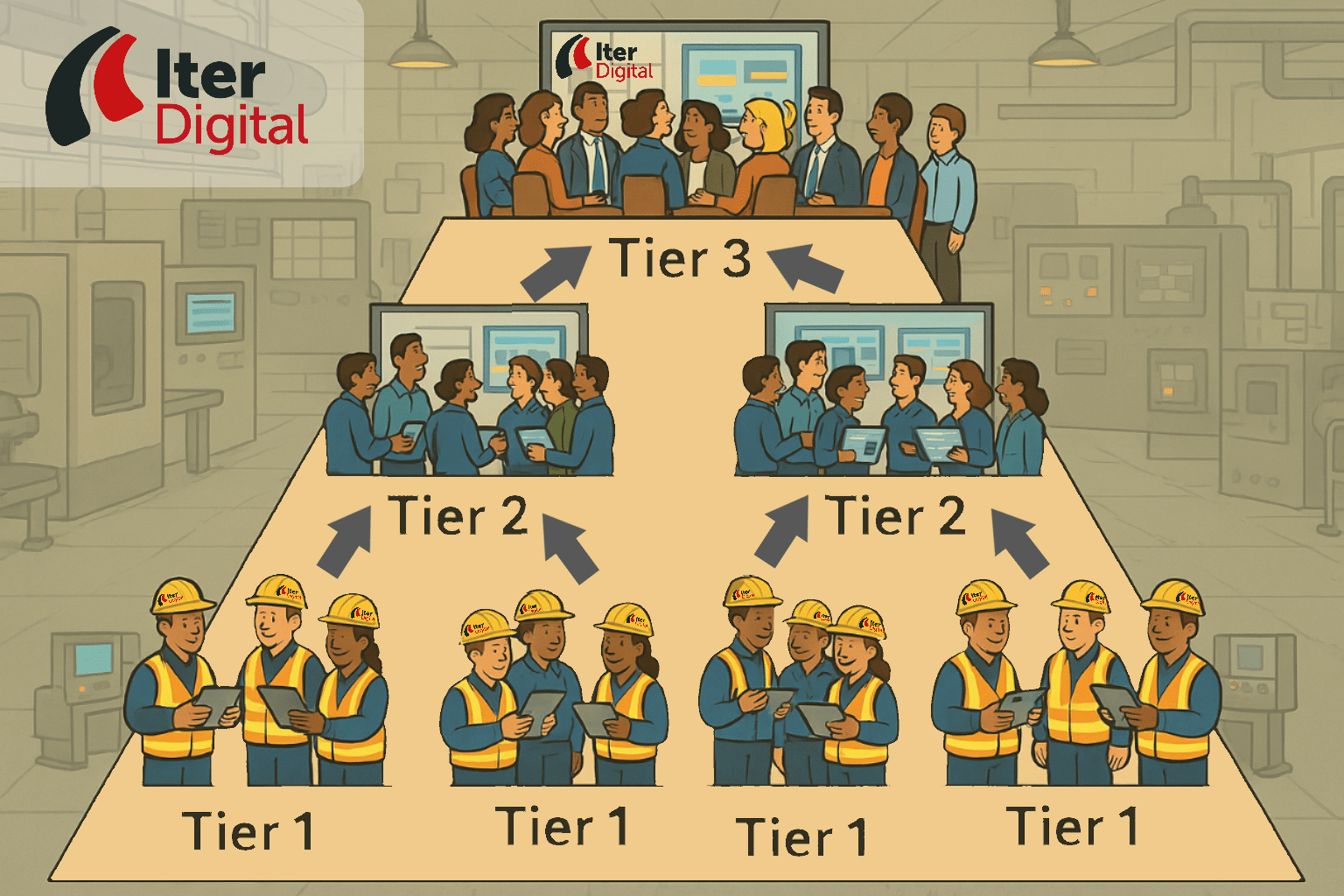
The image highlights how information and support flow upward through the organisation:
- Frontline teams escalate operational issues
- Tier 2 teams coordinate resolution and improvement activity
- Tier 3 leaders remove barriers and drive strategic decisions
This creates faster response times, clearer accountability, and improved collaboration across departments.
Instead of problems being hidden or delayed, issues become visible and actionable in real time.
Digital Transformation is About People First
Technology alone does not transform manufacturing.
Successful transformation happens when:
- People understand the purpose
- Processes are clearly defined
- Support structures are established
- Leadership remains engaged
- Continuous improvement becomes part of the culture
A tiered digital support structure ensures every level of the organisation plays a role in operational success.
At Iter Digital, we help manufacturers build connected operational ecosystems that combine digital technology with practical operational excellence.
Because digitising lean isn’t just about software – it’s about creating operational efficiency that lasts.
How Iter Digital Can Help
We work with manufacturers to:
- Digitise manual processes
- Improve operational visibility
- Simplify shop-floor data collection
- Support continuous improvement initiatives
- Create scalable digital management systems
- Align technology with operational goals
What sets us apart is that we’re all originally operations professionals. We’ve sat in tier meetings, dealt with escalation pressures, chased actions, and worked in environments where time, clarity, and communication really matter on the shop floor.
That real-world experience shapes everything we do. It means we don’t design systems in isolation — we design them to work in the reality of manufacturing operations, where tier meetings are fast-paced, practical, and critical to keeping production moving.
Our approach combines lean thinking with practical digital solutions that empower teams at every level of the organisation.
Ready to Digitise Lean for Operational Efficiency?
Discover how Iter Digital can help your organisation create connected, data-driven manufacturing operations that deliver measurable results.
About the Author

Emma Bowler
Emma brings a unique blend of operational and technical experience, having worked across both manufacturing operations and IT. This combination gives her a practical understanding of the challenges organisations face when adopting digital solutions and driving continuous improvement.